A House Worth Holding On To: Emma’s Story
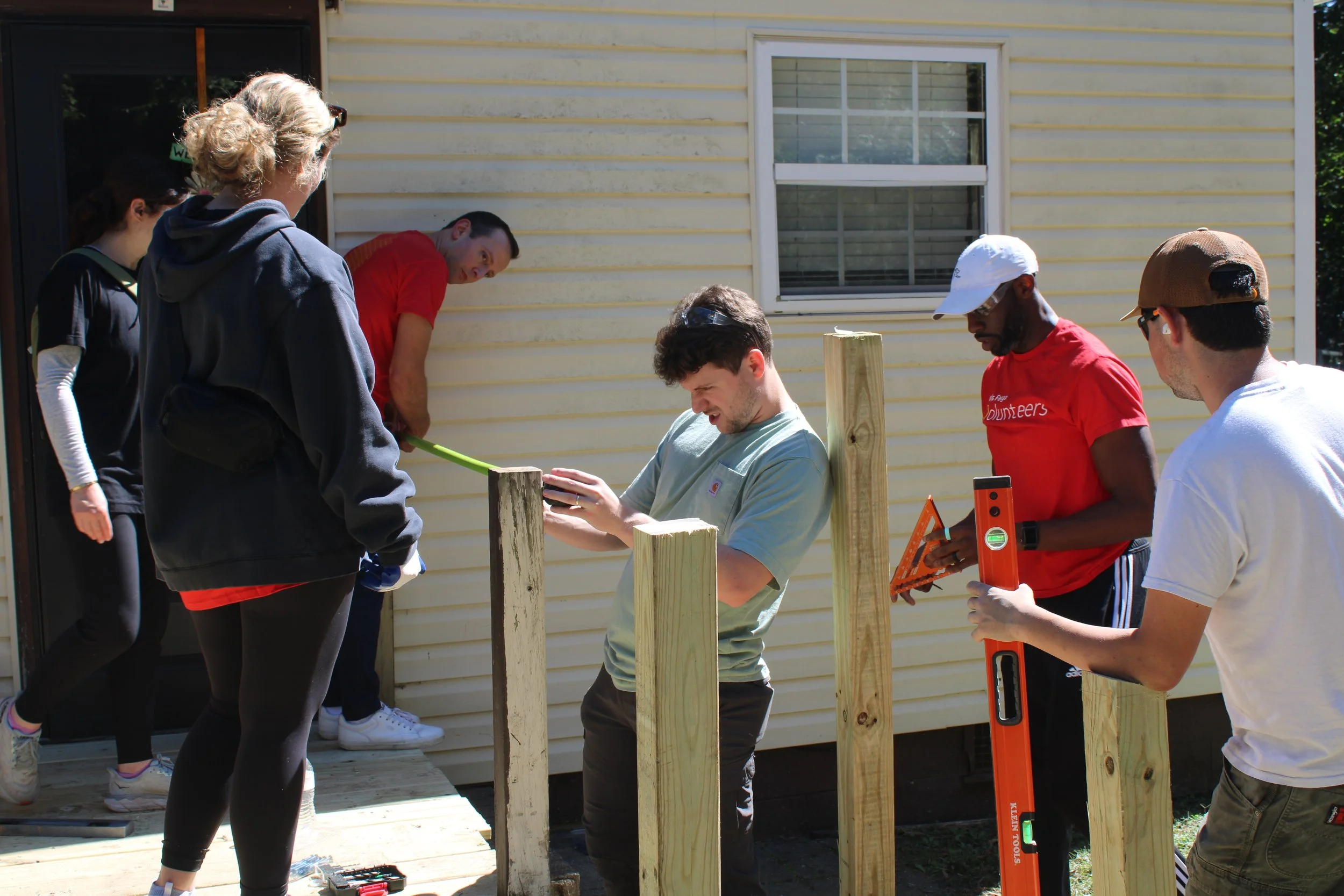
RTGC volunteers install a ramp at Emma’s home
Emma has lived a life defined by resilience from the very beginning.
She is the youngest of ten children. When Emma was just three years old, her mother died in childbirth along with an eleventh sibling, leaving her to grow up without a mom. That same year, Emma survived a devastating burn accident that left more than 50% of her body scarred from the stomach down. She spent over a year in the hospital recovering, an experience that shaped not only her childhood, but her mobility for the rest of her life.
When Emma married, she and her husband settled into a modest three-bedroom home on Charlotte’s east side. That home became the foundation of their family, and after her husband passed away unexpectedly when their daughter Chanelle was just ten years old, it became Emma’s anchor. She stayed. She persevered. She raised her daughter there. Today, Emma has lived in that home for 48 years.
Over the decades, the house became “the place.” A refuge for nieces and nephews. A soft landing for siblings during hard times. A home known for its big backyard, big gatherings, and even bigger love.
“Everybody grew up in that house,” Chanelle says. “At any time, somebody was living with us. They already knew they could come to my mom’s house.”
Recently, Chanelle moved back to Charlotte from New York to be closer to her mom. “If I didn’t come back, I don’t know what would’ve happened,” she says. “She’s not going to ask for help, but I can tell when something’s wrong.”
What Chanelle found was a home, and a mother, under strain.
Years of deferred maintenance had taken a toll. The foundation beneath the home was cracking and sinking, pulling the front porch away from the doorway. The wheelchair ramp that once symbolized Emma’s independence had deteriorated, becoming splintered and unsafe. Moisture had built up under the house, leaving floors damp and unstable. The roof was failing, allowing water intrusion that threatened the structure of the home and the health of the people inside it.
“It’s like the house is sliding,” Emma said. “We can’t lose this place.”
Inside the home, daily life had become increasingly difficult. Emma’s mobility is limited by the long-term effects of her childhood burn injuries, compounded by aging. She relies on both a cane and a walker, but the home no longer met her needs, especially the bathroom.
“She can’t get in and out of the bathtub,” Chanelle explains. “She sits on a bench to wash up, but if she sits down, she can’t get back up.”
With support from Mecklenburg County’s Critical Home Repair and ADA programs, Rebuilding Together of Greater Charlotte stepped in to stabilize both the home and Emma’s future in it.
The repairs addressed urgent health and safety hazards throughout the property. The failing roof was fully replaced, protecting the home from further water damage. Structural repairs were made to the foundation and bathroom floor system to stop the home from shifting and sinking. A new vapor barrier was installed throughout the crawlspace to control moisture and prevent ongoing damage beneath the home. Overgrown tree limbs threatening the roof were removed, and exterior siding was repaired and sealed.
To restore safe access and independence, a new code-compliant wheelchair ramp was constructed at the front entrance, reconnecting Emma to her home and her community. Inside, accessibility modifications transformed daily life: a walk-in shower replaced the bathtub, complete with grab bars and an ADA-approved shower chair; a new chair-height toilet was installed; and flooring was replaced with waterproof luxury vinyl plank to create a safer, more stable surface underfoot.
Additional improvements, from improved ventilation and attic access to updated electrical features, helped ensure the home is not only livable today, but resilient for years to come.
For Emma, these repairs are far more than construction work. They are a lifeline.
This home has been her constant through unimaginable loss and decades of caregiving for her family and for others who needed a place to land. With these repairs, Emma can remain safely in the home she built her life around, move with greater dignity and independence, and finally rest without having to fight her own house to do so.
Thanks to this investment, Emma’s home can continue to be what it has always been: a place of safety, love, and belonging, for her, for Chanelle, and for generations of family who have called it home.