Why Housing Policy Should Include More Funding for Home Repairs
This story was first published on Shelterforce by Todd Swanstrom and John N. Robinson III, highlighting work by Rebuilding Together of St. Louis.
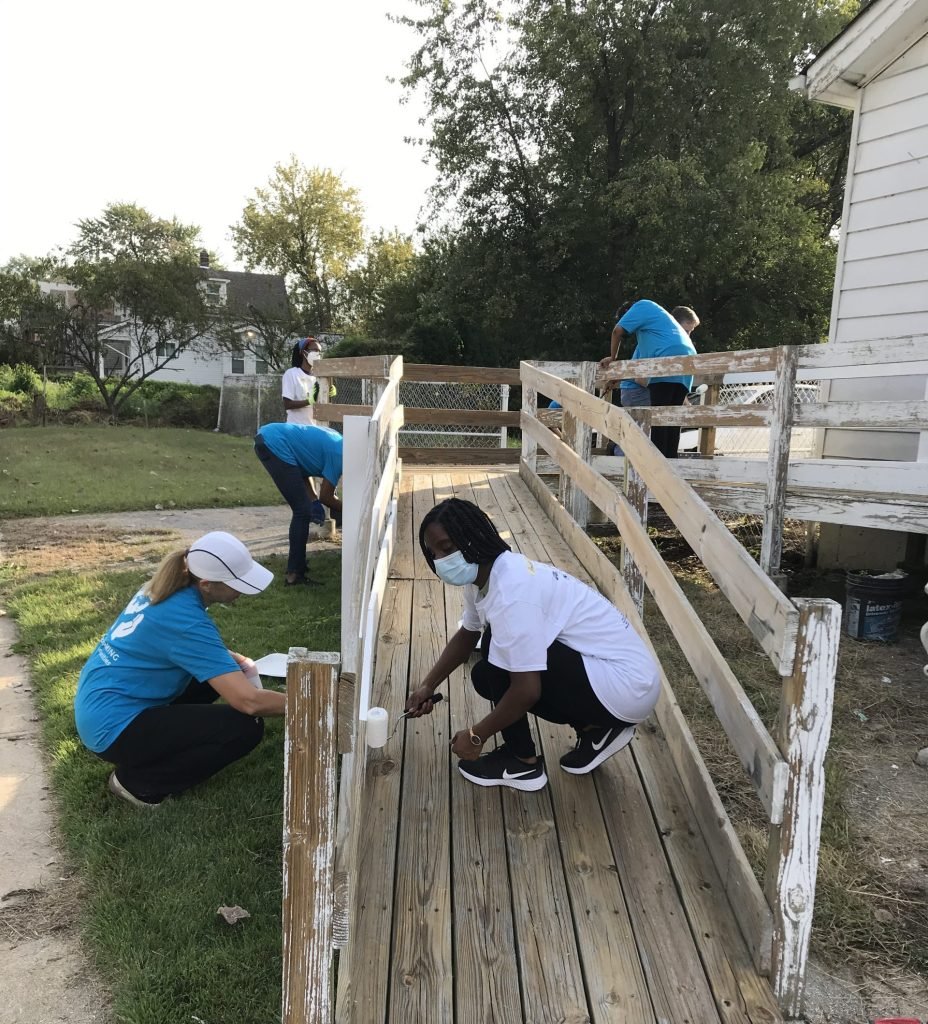
Rebuilding Together has found that for every dollar spent by the organization and its affiliates, $2.84 in social value is generated. Photo by Rebuilding Together St. Louis.
“I could sleep now in the house without worrying about it burning down.” For one North St. Louis homeowner, life changed after she got some repair work done to her home. The home had had problems for as long as she’d owned it. When she moved in, “someone had taken [the] electrical box off the meter,” she says. “It was working, but it was working bad. I was hoping the house wouldn’t catch on fire. The electrical box kept going out in the inside and you could smell the wires burning.”
Fortunately, the homeowner, who spoke with us with the understanding of anonymity, was able to complete repairs through the city’s Healthy Home Repair Program. The repairs gave her something she’d been missing for too long: a good night’s rest. “I’m way more comfortable. I couldn’t sleep at night, because I was scared that it would be a fire or something.”
Our group, the Community Innovation and Action Center at the University of Missouri—St. Louis, completed a study of the need for, and effectiveness of, home repairs for older homeowners in St. Louis. This North St. Louis homeowner was one of multiple residents we interviewed about their experiences with subsidized home repairs. Like others hardest hit by this problem, she is an older Black woman, who lives in a neighborhood that is among the most disadvantaged in our sample. Overall, we found that unmet repair needs were highest in areas with the lowest incomes and home values, which were also inevitably those with the largest Black populations.
According to the National Fire Protection Association, electrical failures caused about 46,700 home fires each year from 2015 to 2019, leading to an average of 390 civilian deaths every year and $1.5 billion in annual property damage. But even if a fire never breaks out, living with the risk itself can profoundly impair a person’s quality of life. Few of us would rest easy at night knowing our houses could catch fire at any minute.
House fire risk is just one of the many life-threatening consequences of home deterioration. Indeed, our research reveals a public health catastrophe in the making. Our survey of 583 older homeowners in St. Louis found that the average cost of unmet home repairs was $13,023, with the cost of making all these repairs citywide totaling over $300 million. Many of the respondents’ homes were quite old, with an average age of 97 years. Almost two-thirds of the respondents had owned their home for 26 years or more. Many of the homeowners struggled with long-term illness, exacerbated by their unsafe homes, and the resulting heavy medical bills.
Homes in bad condition are a serious problem, and repair programs dramatically improve people’s lives. Yet this issue attracts little attention. Why? It’s partly because the need for home repair is difficult to measure and its consequences are largely invisible to the public. Additionally, those most affected have historically faced a unique degree of exclusion from home repair aid.
We have created a practical approach to producing evidence on home repair problems and costs in hopes that it will prove useful to advocates and nonprofits across the nation doing this work.
To continue reading why housing policy should include more funding for home repairs, visit Shelterforce.org.
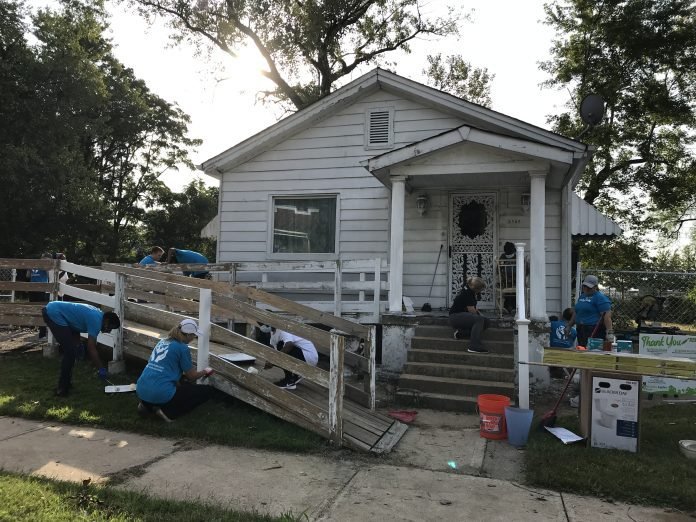
Volunteers with Rebuilding Together St. Louis complete home repairs and modifications for a low-income homeowner in the area. Photo by Rebuilding Together St. Louis.